Pupillary Distance
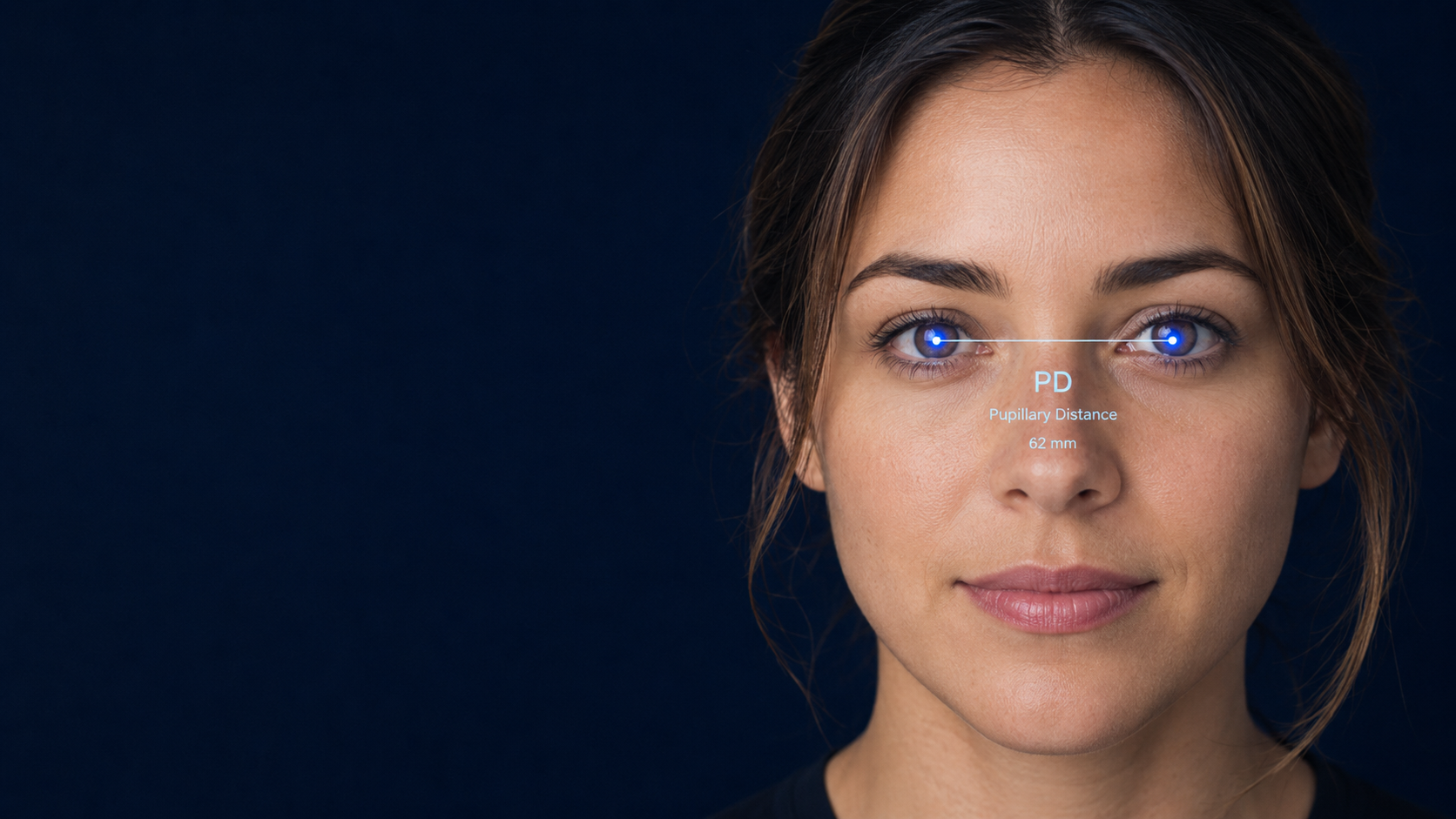
Pupillary Distance:
The one number that can make or break your glasses.
Without the correct PD measurement, even a perfect prescription won’t give you clear, comfortable vision. Here’s what pupillary distance is, why it matters more than most people realize, and how to measure it accurately at home.
What is pupillary distance?
Pupillary distance (PD) is the measurement in millimeters between the centers of your pupils. It’s one of the most important — and most overlooked — numbers when ordering eyeglasses.
When an eyeglass lens is manufactured, it’s ground with an optical center — the point that defines the way light bends to correct your vision. For your glasses to work correctly, that optical center needs to line up precisely with your pupil. Pupillary distance tells the manufacturer exactly where to place it.
Get it wrong, and even a perfect prescription will feel off.
Why your PD matters more than you think
Most people obsess over getting their prescription right — and ignore PD entirely. But an incorrect PD is one of the most common reasons people find their glasses uncomfortable, even when the prescription itself is accurate.
When your lenses aren’t centered correctly on your pupils, your eyes have to work harder to compensate. Over time, that extra effort adds up. Common symptoms of an incorrect PD include:
If your sphere correction is above ±3.00D, even a 1mm error in PD can cause significant prismatic effect — meaning your lenses are bending light incorrectly. The higher your prescription, the more critical an accurate PD becomes.
Binocular vs. monocular PD
There are two ways PD is measured, and understanding the difference matters — especially when ordering progressive lenses or bifocals.
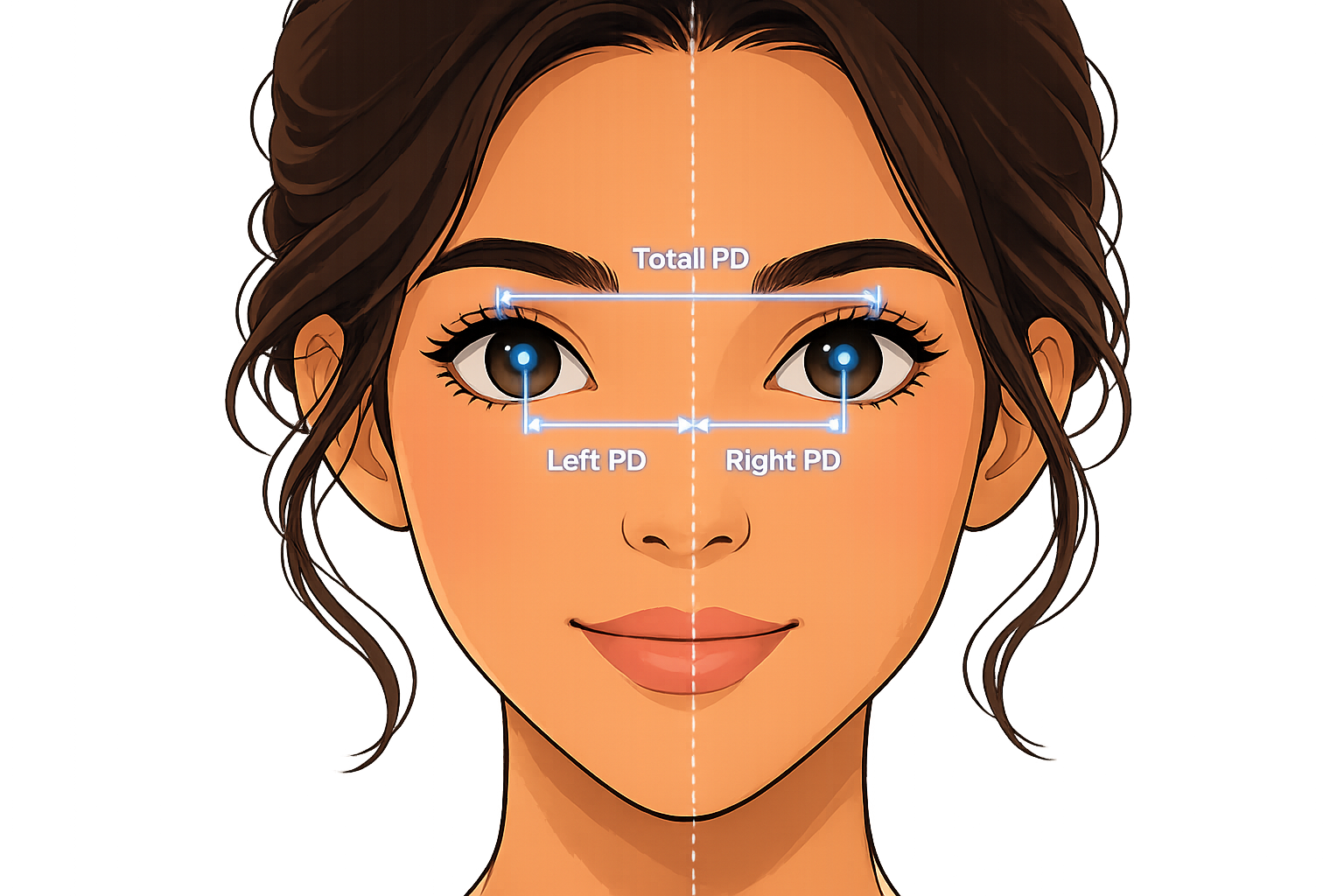
The total distance
Binocular PD measures the full distance between both pupil centers as a single number. It’s the most common format and works well for single-vision lenses with lower prescriptions.
Per-eye measurement
Monocular PD measures the distance from each pupil center to the center of the nose bridge separately — giving two numbers (e.g. 32.0 / 32.5). This is more precise because most people’s eyes aren’t perfectly centered on their face.
If you’re ordering progressive or bifocal lenses, always use monocular PD. For single-vision lenses with a prescription under ±3.00D, binocular PD is typically sufficient. When in doubt, monocular is always more precise.
How to measure your PD
PD can be measured a few different ways — from a basic DIY ruler method to a dedicated measurement device. Accuracy matters, so it’s worth using the most reliable method available to you.
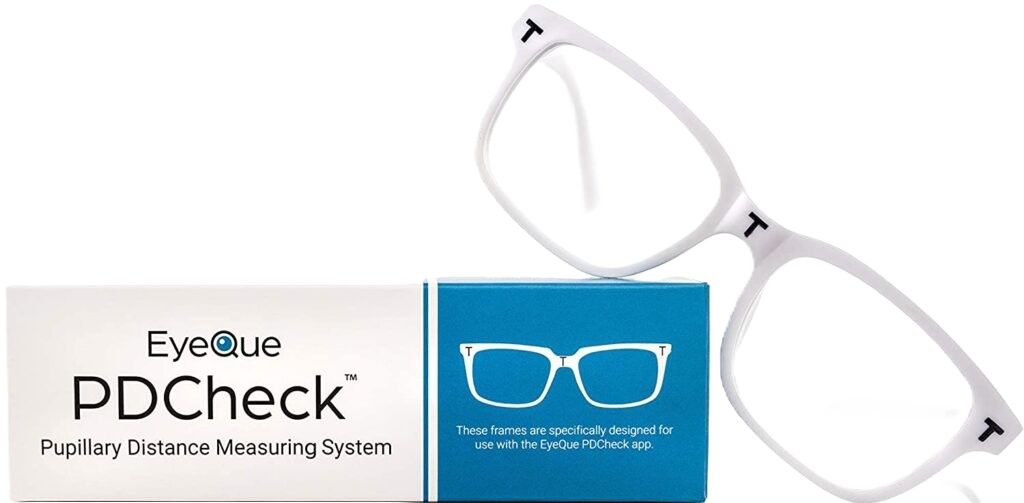
If you need an accurate PD measurement at home, EyeQue makes two options: PDCheck® — a $15 frame device that works with the app for ±1mm accuracy — and PDCheck AR®, a free iOS app that uses augmented reality to estimate your PD without any device. PDCheck is also included with VERAI for anyone getting a full prescription kit.
PD and ordering glasses online
Online eyewear has made glasses significantly more affordable — but it’s also put the responsibility of getting an accurate PD on the buyer. Most online retailers require you to enter your PD when placing an order, and many don’t verify it.
This is where mistakes happen. If you estimate or guess your PD, you may receive glasses that cause the exact symptoms described above — and the retailer may not be able to tell you why.
Before ordering glasses online, make sure you have an accurate PD measurement. If your eye doctor hasn’t provided one, you can measure it at home using PDCheck or ask your doctor to include it on your written prescription — they’re required to provide it in most states.
Under the FTC Eyeglass Rule, your eye doctor must give you a copy of your prescription immediately after your exam — at no extra charge. Your PD may not always be included, but you can request it. Some states specifically require it be provided.
Already have your PD? Get a full prescription from home.
PD is one piece of the glasses puzzle. The other piece is your prescription — sphere, cylinder, and axis. If you have your PD but your prescription is out of date, you still can’t order glasses with confidence.
VERAI by EyeQue combines at-home vision measurement with a doctor-reviewed prescription. You measure your vision using the VERAI device, a licensed doctor reviews your results, and — if you’re eligible — you receive a signed prescription valid at any eyewear retailer. Your Try-On glasses are included so you can confirm fit before committing to a full pair.
Get a full prescription — not just your PD.
VERAI measures your sphere, cylinder, and axis from home. A licensed doctor reviews your results. If eligible, you receive a signed prescription valid at any eyewear retailer — plus custom Try-On glasses.
See VERAI — $129 →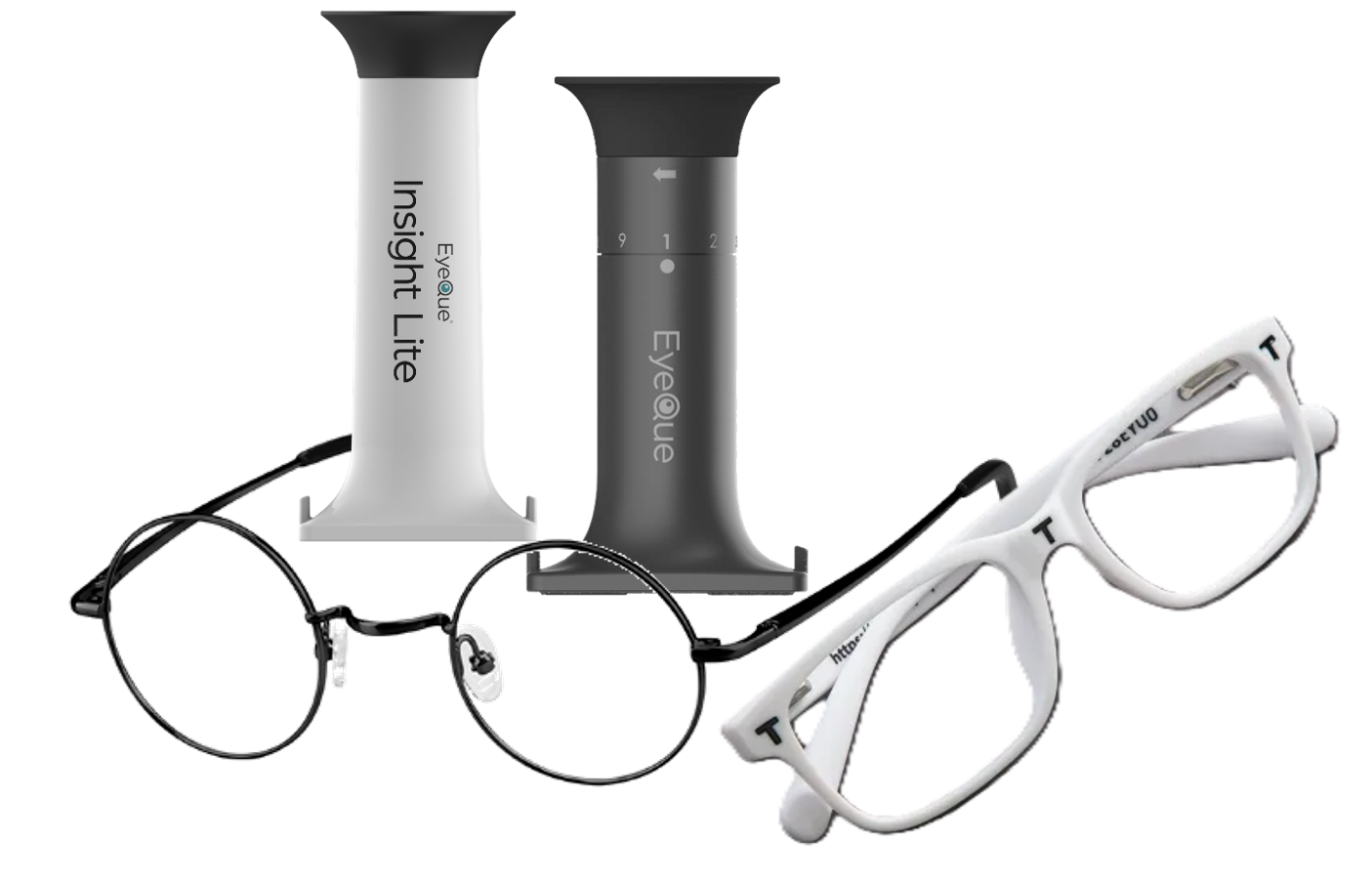
Frequently asked questions
Your PD. Your prescription.
Both from home.
PDCheck gives you an accurate PD measurement in minutes. VERAI gives you a doctor-reviewed prescription. Together they give you everything you need to order glasses online with total confidence.
